Premium Chimney Solutions
Chimney Repair
At The Doctors Chimney, we provide professional chimney repair services to identify the source of the problem and determine the appropriate repair.
Whether you need masonry repair, chimney crown repair, flashing repair, chimney relining, smoke chamber repair, waterproofing, or another chimney service, we can evaluate the condition of your chimney and explain what needs to be done.




What Is Chimney Repair?
Chimney repair refers to the inspection, correction, restoration, or replacement of damaged chimney components.
A chimney is made up of multiple components, and the type of repair required depends on where the problem is located.
Chimney repairs may include:
- Masonry repair
- Brick replacement
- Mortar repair
- Tuckpointing and repointing
- Chimney crown repair
- Chimney cap replacement
- Flashing repair
- Chimney waterproofing
- Chimney relining
- Smoke chamber repair
- Flue repair
- Partial chimney rebuilding
- Chimney rebuilding after extensive damage
The right repair should be based on the actual condition of the chimney rather than simply treating the visible symptom.
Signs Your Chimney Needs Repair
Some chimney problems are easy to see. Others develop inside the chimney and may not be visible from the ground.
Common warning signs include:
Cracked Chimney Bricks
Cracks in the exterior masonry can allow moisture to enter and may indicate deterioration or movement that needs professional evaluation.
Crumbling Mortar
If the mortar between bricks is cracked, recessed, loose, or crumbling, the chimney may need repointing or tuckpointing.
Spalling Bricks
If the surface of bricks is flaking, cracking, or breaking away, the masonry may be experiencing spalling.
Water Leaks
Water stains around the fireplace, ceiling, walls, or chimney area can indicate a problem with the chimney cap, crown, flashing, masonry, or another component.
Water is a major contributor to chimney deterioration, and prolonged moisture exposure can damage masonry and other chimney components.
Loose or Missing Bricks
Loose or missing bricks should be evaluated before additional masonry deteriorates.
Damaged Chimney Crown
Cracks or deterioration at the top of the chimney can allow water to enter the masonry.
Damaged Chimney Cap
A missing or damaged cap can allow rain, debris, and animals to enter the chimney.
Damaged Flashing
Flashing seals the area where the chimney meets the roof. Damaged or separated flashing can allow water into the home.
Smoke or Draft Problems
Changes in fireplace draft, smoke entering the home, or unusual fireplace performance can have multiple causes and should be professionally evaluated.
Damage After a Chimney Fire
A chimney fire can damage flue liners, mortar, tiles, and exterior masonry. CSIA notes that chimney fires can crack liners and damage masonry, and the appropriate repair can range from replacing sections of flue liner to rebuilding the chimney, depending on the damage.
Common Chimney Repairs
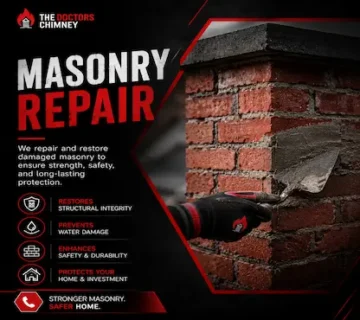
Masonry is one of the most exposed parts of your chimney.
Brick and mortar are constantly exposed to rain, snow, wind, temperature changes, and moisture.
Masonry repair may involve:
- Damaged brick replacement
- Mortar joint repair
- Tuckpointing
- Repointing
- Spalling brick repair
- Loose brick repair
- Partial masonry rebuilding
If the masonry damage is extensive, a larger section of the chimney may require rebuilding.
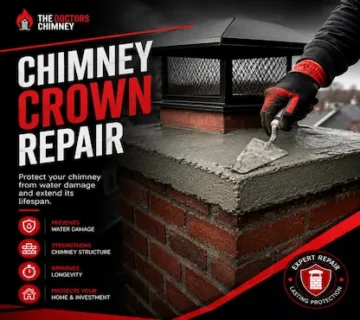
Chimney Crown Repair
The chimney crown is located at the top of the chimney and helps direct water away from the masonry.
A cracked, deteriorated, or improperly constructed crown can allow water to reach the chimney masonry.
Chimney crown repair may involve repairing cracks, restoring damaged areas, or replacing a severely deteriorated crown.
The condition of the crown should be evaluated as part of any chimney inspection where water damage is suspected.
Chimney Flashing Repair
Flashing is located where the chimney intersects with the roof.
Its job is to help prevent water from entering the area where the chimney passes through the roof.
Damaged, loose, or improperly sealed flashing can cause water to enter the home and may lead to staining, wood damage, or deterioration around the chimney.
CSIA identifies damaged flashing as an important potential source of chimney water intrusion.
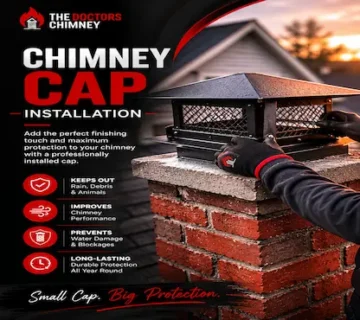
Chimney Cap Repair and Replacement
A chimney cap helps protect the chimney opening from:
- Rain
- Snow
- Leaves
- Debris
- Birds
- Wildlife
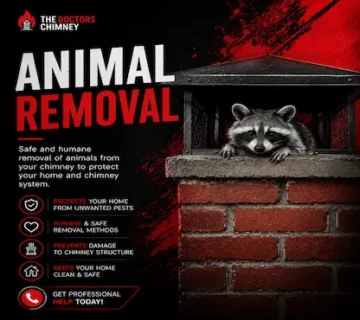
A damaged or missing chimney cap can increase exposure to moisture and make it easier for animals to enter the chimney.
Depending on its condition, the cap may be repairable or may need to be replaced.
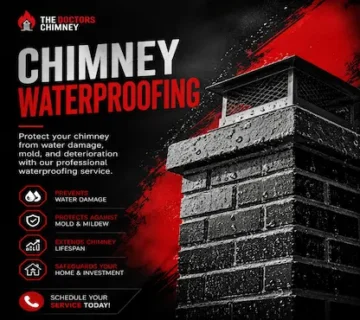
Chimney Waterproofing
Masonry chimneys are exposed to water throughout the year.
Bricks and mortar can absorb moisture, and repeated exposure can contribute to deterioration.
Chimney waterproofing can be part of a preventive maintenance strategy when appropriate for the masonry.
However, waterproofing should not be used to hide existing structural damage.
Cracked masonry, deteriorated mortar, damaged crowns, or other problems should be properly evaluated and repaired first.
CSIA specifically recommends appropriate waterproofing as one of several measures that can help reduce water-related chimney damage.
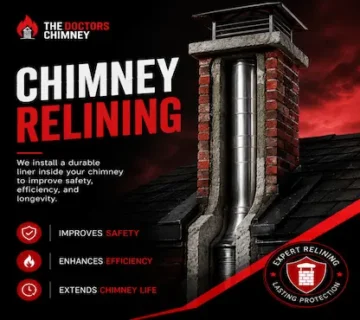
Chimney Relining
The chimney liner helps protect the chimney structure and provides an appropriate passage for combustion gases.
A damaged, cracked, deteriorated, or otherwise unsuitable liner may require repair or replacement.
Chimney relining is a specialized repair that should be based on the type of appliance, chimney configuration, liner condition, and applicable installation requirements.
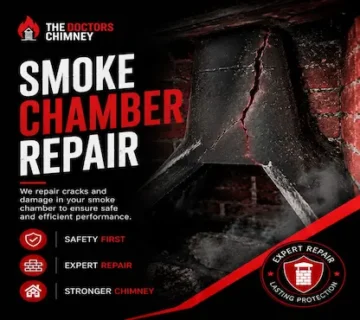
Smoke Chamber Repair
The smoke chamber is the area above the fireplace where smoke transitions toward the chimney flue.
Damage or deterioration in this area can affect the chimney system and should be evaluated as part of a professional inspection.
Depending on the condition, smoke chamber repair may be necessary to restore the affected area.
Chimney Repair After a Chimney Fire
A chimney fire can cause damage that isn’t visible from outside the home.
High temperatures during a chimney fire can crack flue tiles, damage liners, displace mortar, and damage exterior masonry.
If you suspect that your chimney has experienced a fire, do not simply clean the fireplace and continue using it.
The chimney should be professionally evaluated before it is returned to service. CSIA advises homeowners not to use a chimney after a suspected chimney fire until it has been properly swept and evaluated by a qualified professional.
Depending on the findings, the repair may involve:
- Flue liner repair
- Liner replacement
- Masonry repair
- Crown repair
- Smoke chamber repair
- Partial rebuilding
- Full chimney rebuilding
Chimney Repair After Water Damage
Water is one of the biggest threats to masonry chimneys.
It can enter through:
- Cracked masonry
- Deteriorated mortar
- Damaged chimney crowns
- Missing or damaged caps
- Defective flashing
- Other openings
Once water enters the chimney, repeated exposure can contribute to brick and mortar deterioration.
CSIA notes that prolonged water exposure can lead to damaged brickwork, rusted components, deteriorated flue liners, and other chimney problems.
If you see water stains around your chimney or fireplace, don’t assume the source is obvious.
The entire chimney system should be evaluated.
Chimney Repair vs. Chimney Replacement
Not every damaged chimney needs to be completely rebuilt.
A chimney with localized damage may only require:
- Brick replacement
- Mortar repair
- Crown repair
- Flashing repair
- Cap replacement
- Waterproofing
More extensive damage may require partial rebuilding or complete chimney reconstruction.
The decision should be based on the condition of the structure and the extent of deterioration.
A professional inspection is the best way to determine whether repair or rebuilding is appropriate.
Partial Chimney Rebuild
A partial chimney rebuild may be appropriate when damage is concentrated in a particular section.
For example, the upper portion of a chimney may have significant masonry deterioration while the lower section remains in acceptable condition.
In that situation, rebuilding the affected portion may be possible instead of replacing the entire chimney.
The exact scope depends on the condition of the existing masonry and structure.
Full Chimney Rebuild
A full chimney rebuild may be necessary when deterioration is extensive or when the structural integrity of the chimney has been significantly compromised.
A chimney that is severely leaning, extensively deteriorated, or structurally unstable should not be treated as a simple cosmetic repair.
A professional evaluation should determine the safest and most appropriate solution.
How Does Chimney Repair Work?
Every chimney repair project is different, but the process generally starts with diagnosis.
1. Chimney Inspection
The chimney is evaluated to identify visible and accessible signs of damage.
The inspection may include the:
- Exterior masonry
- Crown
- Chimney cap
- Flashing
- Accessible flue components
- Smoke chamber
- Other visible chimney components
2. Identify the Source of the Problem
The goal is not simply to repair what is visible.
For example, damaged bricks may be the result of a moisture problem originating from the crown or flashing.
Identifying the source helps determine the appropriate repair.
3. Determine the Repair Scope
After evaluating the chimney, the appropriate repair is determined.
This could be a localized repair or a more extensive restoration.
4. Complete the Necessary Repair
The damaged component is repaired or replaced using appropriate materials and methods.
5. Address Related Problems
If another chimney component contributed to the damage, that issue should also be addressed.
6. Final Evaluation
The repaired area and related components are checked to make sure the identified problem has been properly addressed
Why You Shouldn't Ignore Chimney Damage
A small chimney problem can become much larger when exposed to weather year after year.
For example:
A small crack can allow moisture in.
Moisture can contribute to deterioration.
Deterioration can lead to loose bricks or failing mortar.
And eventually, what started as a small repair can become a much more extensive project.
That’s why early evaluation can be valuable.
Can Chimney Repairs Prevent Future Damage?
The answer depends on the cause of the original problem.
Repairing deteriorated masonry can address existing damage.
Replacing a damaged chimney cap can help prevent rain and wildlife from entering through the top.
Repairing flashing can help address water entry at the roofline.
Repairing a crown can help protect the masonry below it.
Waterproofing may provide additional moisture protection when appropriate.
The best long-term approach is to address both the damage and its cause.
How Much Does Chimney Repair Cost?
There is no single price for chimney repair.
The cost depends on:
- Type of damage
- Chimney size
- Chimney height
- Accessibility
- Number of damaged bricks
- Condition of mortar
- Crown condition
- Flashing condition
- Liner condition
- Extent of water damage
- Whether rebuilding is required
- Materials needed
A few damaged bricks require a very different scope of work from a chimney that needs extensive masonry rebuilding.
A professional inspection is the best starting point for an accurate estimate.
How Long Does Chimney Repair Take?
The timeline depends on the type and extent of the repair.
A minor repair may be completed much faster than a project involving:
- Extensive masonry deterioration
- Difficult roof access
- Partial rebuilding
- Liner replacement
- Multiple chimney components
- Weather-related delays
After the chimney is inspected, the scope of work can be explained more accurately.
How Often Should a Chimney Be Inspected?
Regular inspection can help identify deterioration before it becomes a larger repair.
CSIA notes that chimney systems can develop problems even when they are not used frequently, including animal nests and deterioration, and recommends regular inspection and maintenance.
The appropriate inspection frequency depends on the chimney, appliance, fuel type, usage, and condition.
If you’ve noticed a new problem, you should not wait for the next routine inspection.
Chimney Repair Near You
If you’re searching for chimney repair near me, you may already have a visible problem—or you may simply know that something isn’t right.
Maybe you noticed:
- Cracked bricks
- Crumbling mortar
- A chimney leak
- Water stains
- A damaged crown
- Loose bricks
- A damaged chimney cap
- Smoke problems
- Unusual fireplace performance
The Doctors Chimney can inspect the chimney and help determine what is causing the problem and what type of repair is appropriate.
Why Choose The Doctors Chimney?
Chimney repair shouldn’t start with guessing.
It should start with understanding what is actually wrong.
At The Doctors Chimney, we evaluate the chimney system and identify the areas that require attention.
Professional Evaluation
We look for visible signs of masonry, water, structural, and chimney component damage.
Targeted Repairs
Not every chimney needs a complete rebuild. We determine whether the problem can be addressed with a localized repair or requires more extensive work.
Complete Chimney Services
Our chimney services include masonry repair, crown repair, waterproofing, relining, smoke chamber repair, cap installation, and other chimney maintenance services.
Clear Recommendations
We explain what we find and what your chimney needs before moving forward with additional work.
Long-Term Chimney Care
Our goal isn’t just to fix today’s visible problem. We also look for related conditions that could contribute to future chimney damage.
Frequently Asked Questions About Chimney Repair
Chimney repair can include masonry repair, brick replacement, mortar repair, crown repair, flashing repair, chimney cap replacement, waterproofing, relining, smoke chamber repair, and rebuilding depending on the condition of the chimney.
Cracked bricks, deteriorated mortar, spalling, water leaks, damaged crowns, loose bricks, damaged flashing, or unusual fireplace and chimney performance can all be reasons to schedule an inspection.
Sometimes. The appropriate repair depends on the location, size, pattern, and cause of the crack.
No. Many chimney problems can be addressed with localized repairs. Rebuilding is generally considered when damage is extensive or structural integrity has been compromised.
The cost depends on the type and extent of damage, chimney size, accessibility, materials, and whether additional components require repair.
The timeline depends on the repair required. Minor repairs may take much less time than masonry rebuilding or liner replacement.
If you already know there is damage, repairing it before the heating season is a good reason to schedule an evaluation rather than waiting for the problem to worsen.
Don't Wait for a Small Chimney Problem to Become a Major Repair
Cracked bricks, deteriorating mortar, water stains, and damaged chimney components shouldn’t be ignored.
The earlier the source of the problem is identified, the easier it may be to determine the appropriate repair.
If you’re concerned about the condition of your chimney, let The Doctors Chimney inspect it and explain what needs attention.
Find the Problem. Fix the Cause. Protect Your Chimney.
[BOOK YOUR CHIMNEY INSPECTION]
The Doctors Chimney — Professional Chimney Care You Can Trust.

No comment